
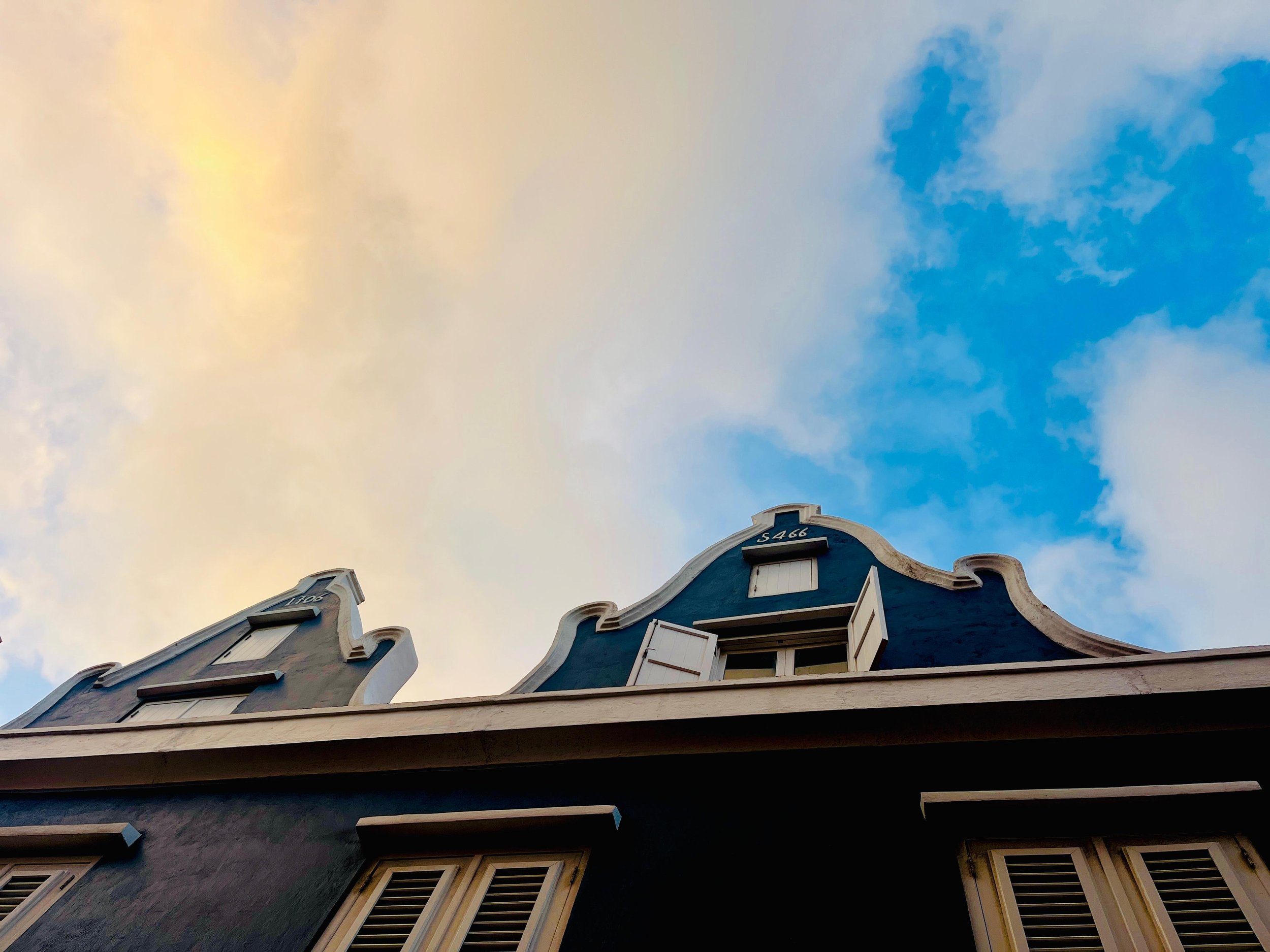
CURAÇAO
375 Years of Jewish Heritage
On a muggy afternoon in Curaçao’s city center, entering the courtyard of a 1732 synagogue brings a welcomed sense of zen and awe. The noise of traffic, harbor horns, and urban life fades. The salty breeze slows, the light softens. The white sand floor in the sanctuary ahead dampens every footstep. A 14th-century Torah rests under a gentle spotlight, glowing with quiet pride.
What begins as a brief visit into an historic building becomes something much more profound: the realization that this island, often reduced to cliché images of colorful houses and pristine beaches, is home to one of the oldest and most enduring Jewish stories in the Western Hemisphere.
Jewish life here did not merely survive; it flourished while shaping trade routes and seeding formative congregations across the Americas. For travelers seeking meaning beyond the familiar, Curaçao offers not nostalgia but revelation.
A Tropical Island
at the Heart of
Jewish History
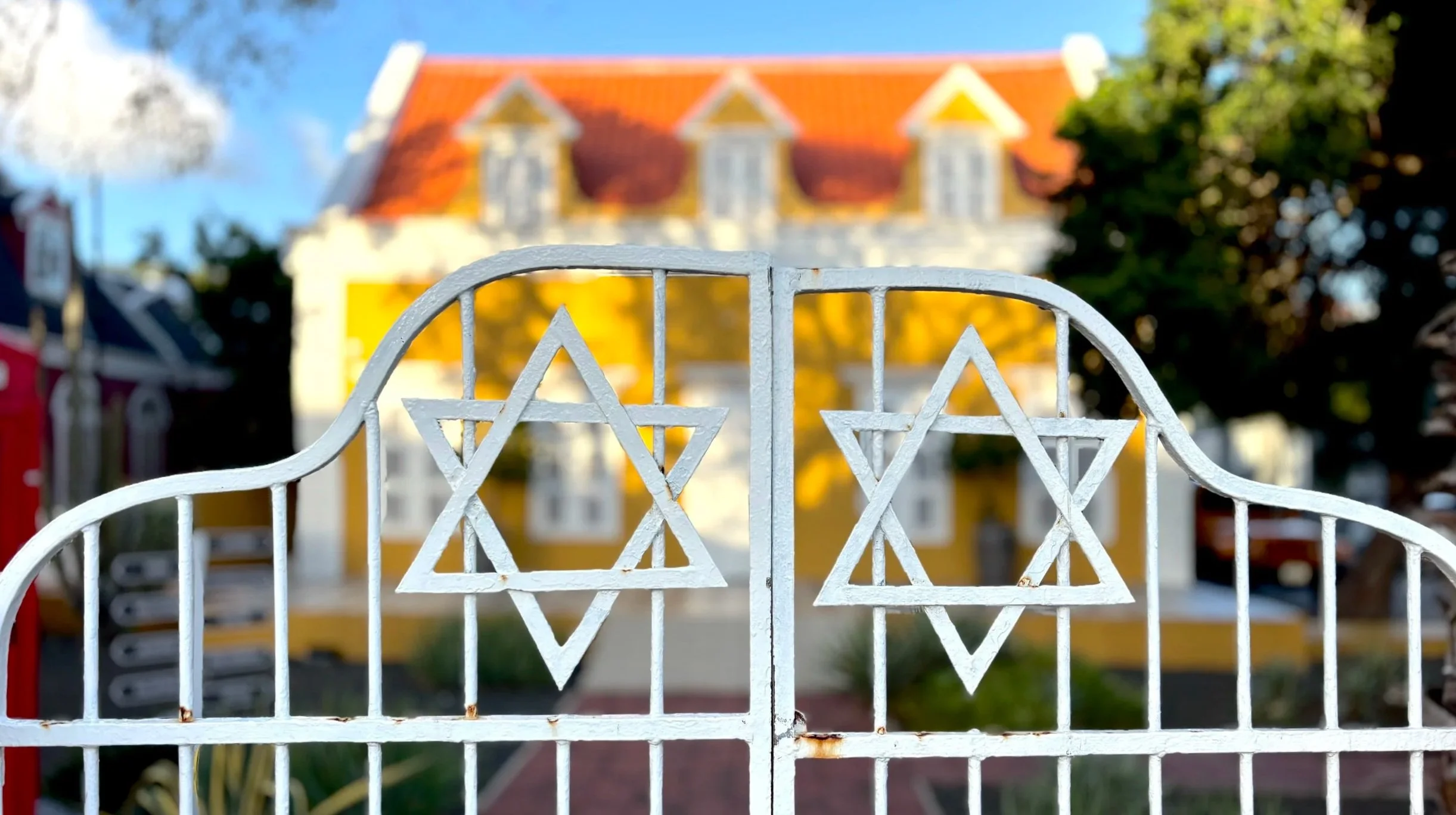
What makes Curaçao so striking is how seamlessly its Jewish story hides in plain sight.
The island’s Jewish presence rarely appears in mainstream tourism narratives, yet it is embedded in the very design of the UNESCO-listed capital city, Willemstad. What makes Curaçao so striking is how seamlessly its Jewish story hides in plain sight. It lingers in street names, family lineages, merchant houses built by Sephardic traders, and wrought-iron gates marked with Stars of David. Even Papiamentu, the local language, carries the imprint of Portuguese brought to the island by Sephardim.
Yet this story cannot be told without first widening the lens to the world these families left behind.
The earliest chapters of this presence began in the mid-seventeenth century, when well-established Jews from Amsterdam’s Sephardic community crossed the Atlantic, drawn by economic opportunity. In 1630, the Dutch West India Company seized the Brazilian port city of Recife, then captured larger swaths of interior sugar-rich provinces. In the wake of this new Dutch corridor, Sephardic Jews, protected by the relatively tolerant Dutch government migrated across the Atlantic to establish new lives as merchants, financiers, and settlers.
This story cannot be told without first widening the lens to the world these families left behind.
The story of Jewish Curaçao begins with Samuel Cohen, who came to the island in 1634 with the Dutch West India Company fleet that captured Curaçao from Spain. Cohen served as an interpreter, and is generally regarded as the first Jew to set foot on the island. Soon after, in 1651, the Dutch West India Company authorized a small handful of Jewish families to migrate to Curaçao to start Plantation De Hoop (“The Hope”) and form Congregation Mikvé Israel. They arrived to the island with the instincts of a port people: prayer books in hand and trade languages on their tongues.
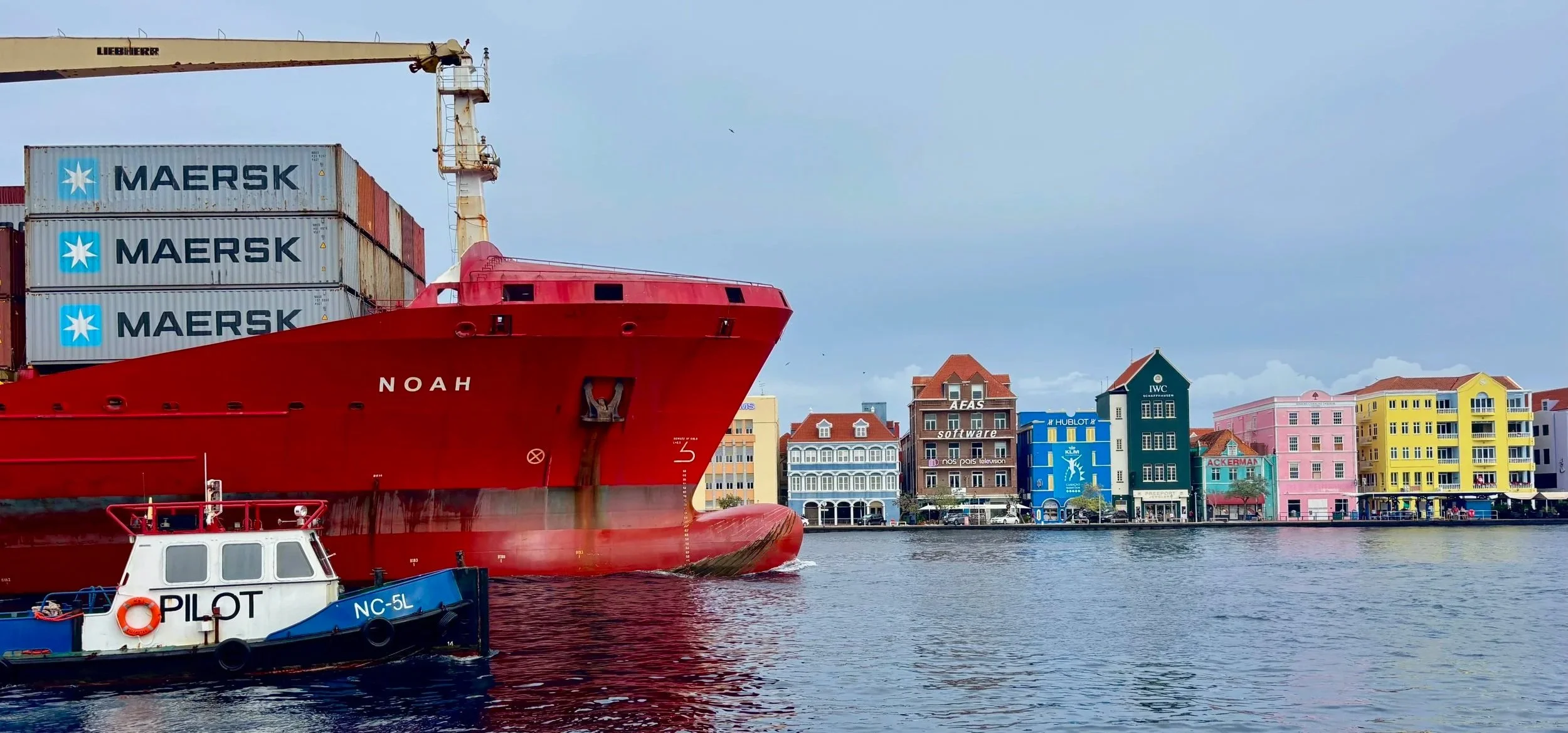
They were farmers on paper, but merchants at heart, and the island was never really about the soil; it was about the harbor. So, after the arid soil proved difficult to farm, the settlers pivoted to the skill that their Atlantic networks made possible, transforming Curaçao into a commercial hub linking Europe, the Caribbean, and South America.
They were farmers on paper, but merchants at heart, and the island was never really about the soil; it was about the harbor.
It is here that Curaçao’s story intersects with another beginning.
Just three years after Cohen arrived to Curaçao, the Portuguese retook the Brazilian port cities from the Dutch. Jews were expelled almost as quickly as they had once been invited. The Dutch flag came down, and with it, Dutch protections and religious tolerance. Families who had just rebuilt communal life were forced to flee again: packing trunks, rolling Torah scrolls, and securing passage to wherever they could. They scattered mostly to Amsterdam and Caribbean French or Dutch havens, with a small but famous group pushing farther north, reaching New Amsterdam (modern day lower Manhattan).
In 2026, Curaçao celebrates 375 years of continuous Jewish life.
In 2026, Curaçao celebrates 375 years of Jewish life on the island; Congregation Shearith Israel of New York is only three years younger. This relationship is more than chronological; it is familial. The 23 Sephardic refugees who arrived in modern-day Manhattan established the Mill Street Synagogue, later known as Congregation Shearith Israel, the oldest congregation in North America.
These sister-communities both began in Dutch colonies, sustained by the same Amsterdam-based Sephardic networks and strengthened by the same cycle of displacement. One congregation took root in a strategic Caribbean fortress hub, the other in a raw frontier port already humming with trade, and destined to become the sprawling metropolis and largest epicenter of Jewish life outside of Israel. Long before hundreds of synagogues dotted North America, there were these two beginnings.
Each move was a calculated wager on the long-game that somewhere in the New World there was harbor where Jewish life could be lived without fear.
The newly expanded Jewish Museum Curaçao offers perhaps the most comprehensive view of this heritage. Located beside the historic synagogue in the bustling old city, the museum is a dynamic space that blends centuries-old artifacts with contemporary and interactive storytelling. Its galleries feature handwritten manuscripts, ritual objects carried across oceans and through two World Wars, and immersive exhibits tracing the intertwined histories of migration, religious life, and cultural resilience.
In Curaçao, later waves of Ashkenazi families added new layers to this story. Fleeing persecution in Eastern and Central Europe in the late 19th and early 20th centuries, they brought their own melodies, languages, and rituals into a delicate dialogue with the island’s deeply rooted Sephardic community.
Shops, social clubs, and new congregations were established, including the Ashkenazi Orthodox Congregation Shaarei Tsedek. In time, the community paralleled the old Jewish joke about a town needing two synagogues — “one to pray in and one you’d never step foot in.” Yet today, with only about two hundred Jews on the island, the community leans toward unity, moving fluidly between two congregations and sharing in each other’s celebrations and milestones.
Each move was a calculated wager that somewhere in the New World, Jewish life could be lived without fear.
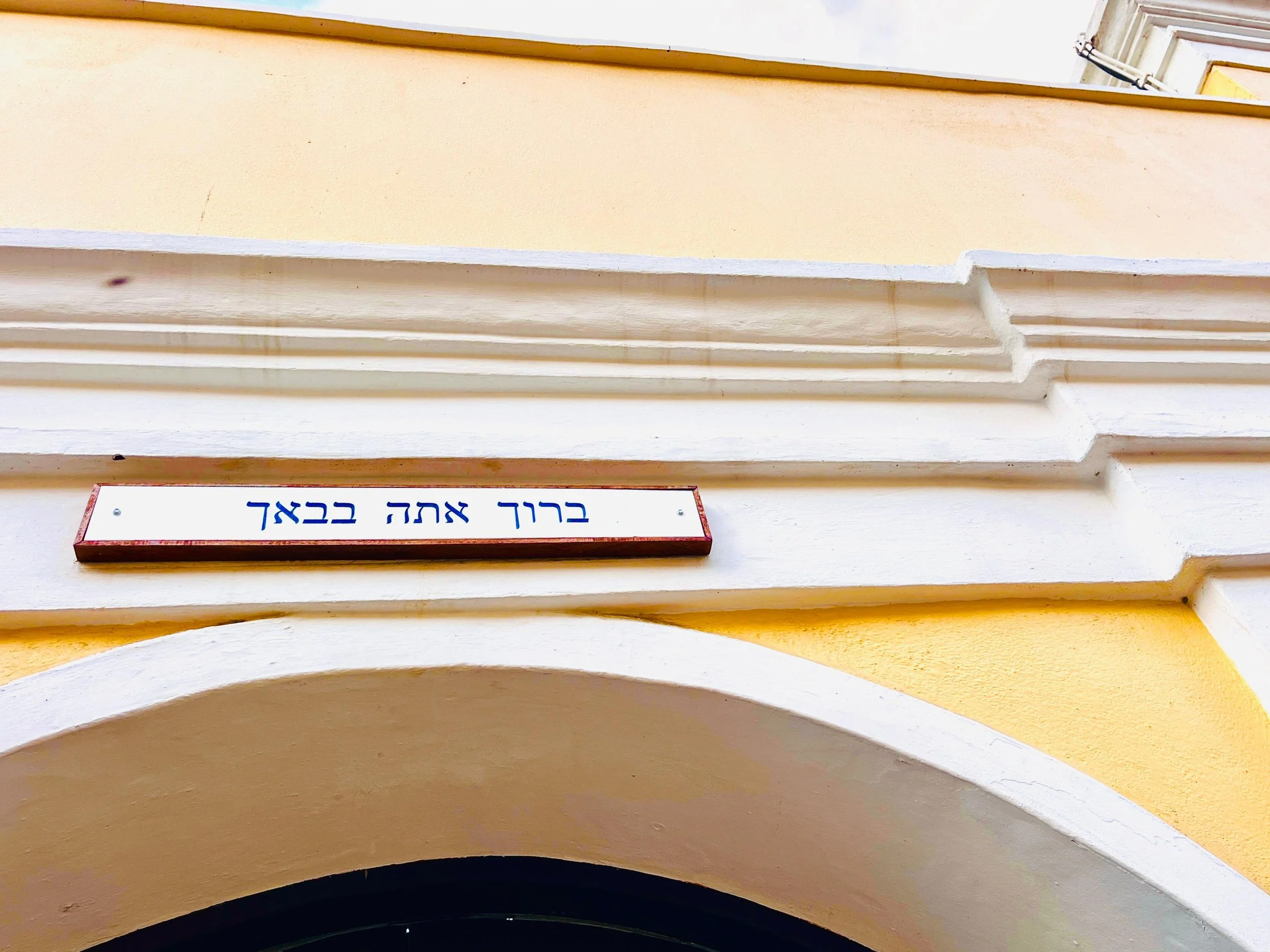
For many, Curaçao reframes what the Jewish diaspora looks like.
For many, a visit to Curaçao reframes the narrative of the Jewish diaspora; the familiar anchors of Ashkenazi immigration form only part of the hemispheric story. On this small Caribbean island, a different lineage appears: one molded by Sephardic merchants from Amsterdam, Ashkenazi peddlers from Eastern Europe, Afro- and Latin-Caribbean neighbors, and the cultural crosscurrents that have always moved through the port cities of the Caribbean. Here, all of these threads are braided into a unique Jewish fabric. This is Curaçao’s quiet power.
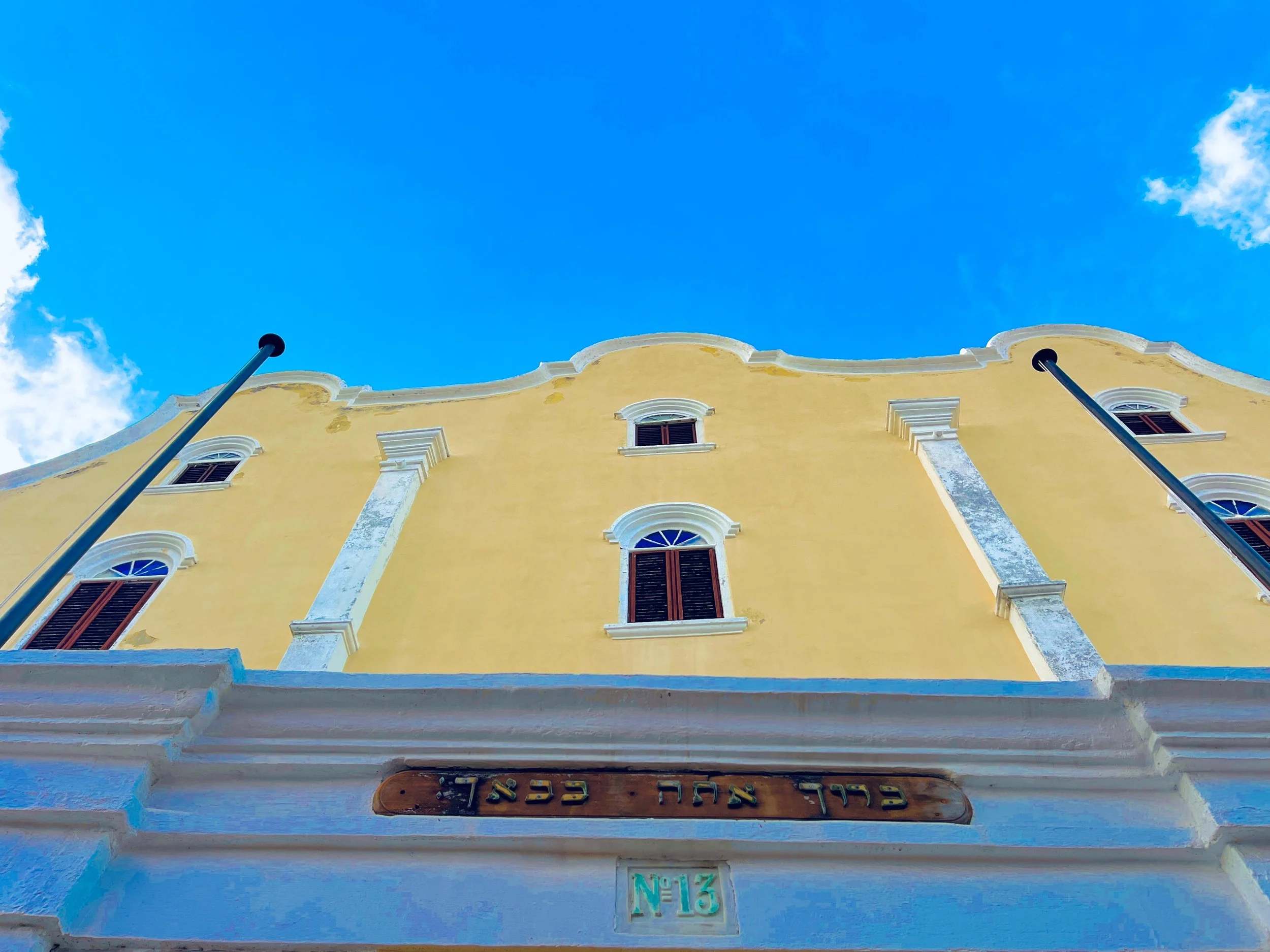
This is Curaçao’s quiet power.
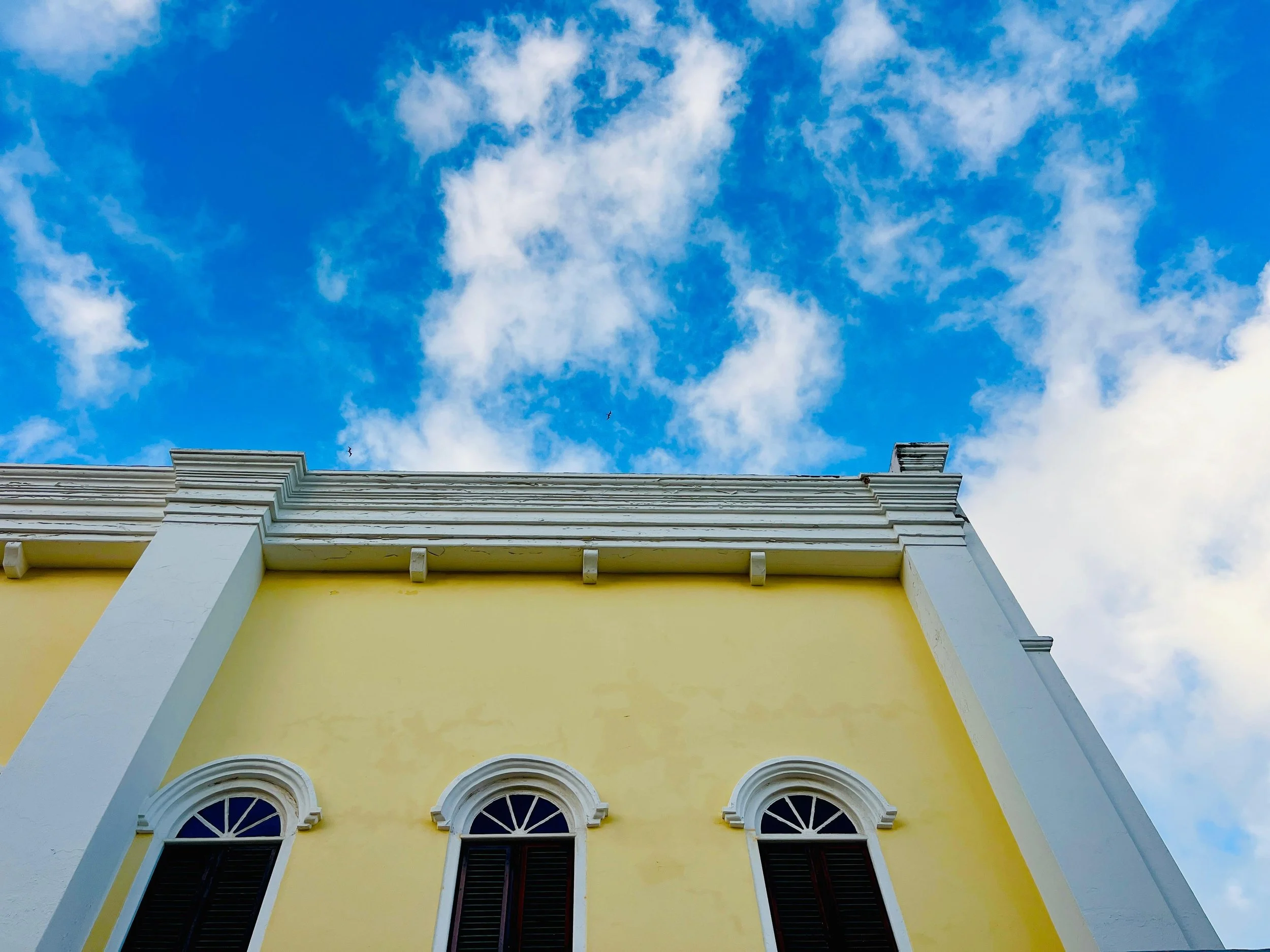
The island’s Jewish community endures because of a long tradition of adaptability and shared stewardship. Even as demographic shifts reshape Jewish life across the Caribbean, Curaçao remains a rare center of activity, supported by locals, diaspora families, and visitors. For historians, the island has become an indispensable point of reference; its archives and communal records together offer one of the most comprehensive portraits of Sephardic and Ashkenazi life in the Atlantic world, frequently cited in research on trade networks, migration, and the shaping of early American Jewish communities. Today, bar and bat mitzvah celebrations take place regularly, international groups partner with the Jewish Museum on exhibitions and educational programs, and families return year after year to reconnect with an island that played a formative role in the wider Jewish story.
In a region where many Jewish communities now exist mostly in memory, Curaçao remains a place of practice: a museum still adding rooms, a Jewish calendar still kept, and an active, inclusive, and growing Chabad House. This story that began with trade and opportunity, continues to write its next chapter.
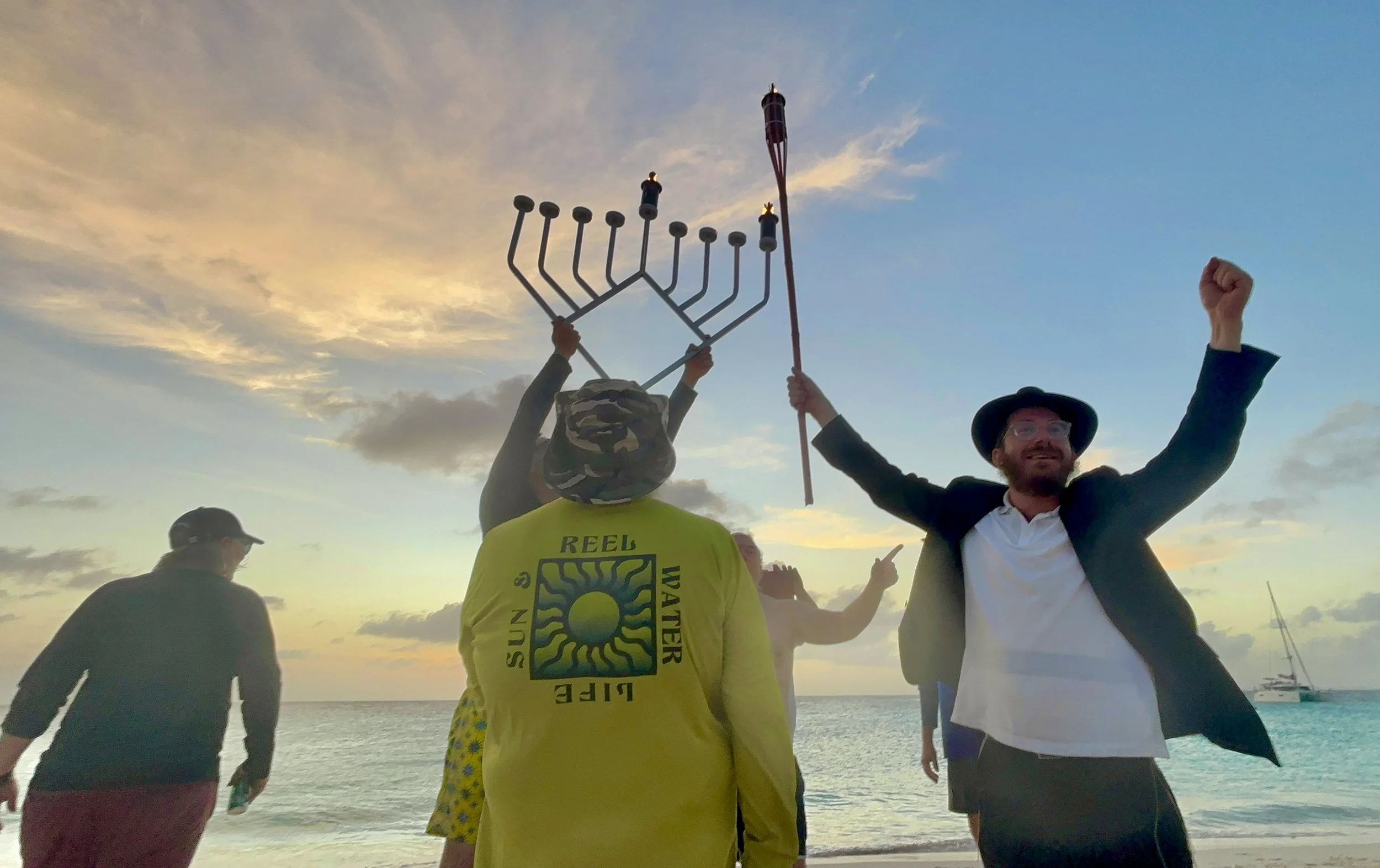
For centuries, Jews crossed oceans to build this community.
To visit is to become part of its continuum.
A Note on Our Name
L’Dor Vador (לדור ודור), Hebrew for “from generation to generation,” speaks to the heart of Jewish continuity — the lived, emotional bond that links grandparents to grandchildren, ancestors to descendants, through memory, tradition, and shared identity. It appears throughout Jewish liturgy and is often used colloquially to express the sacred responsibility of passing down history, values, and belonging.
For us at L’Dor Vador Travel, the phrase captures the essence of what we offer: journeys that reconnect travelers with the roots of Jewish life in Curaçao, and a chance to step into the transatlantic Jewish story and find one’s place within it.
What We Offer
-
We’ll be waiting when you land. Our team provides smooth, private airport transfers to your hotel or villa, so you can start your journey with comfort and ease. Group arrivals and special handling requests are also easily accommodated.
-
Whether you're planning a small family trip or a large group journey, we handle all hotel bookings and room allotments. We work closely with Curaçao’s top hotels and guesthouses to ensure availability and comfort.
-
From private cars to full-size motorcoaches, we organize safe, comfortable transportation tailored to your group’s size and needs. All vehicles are operated by trusted local drivers familiar with heritage sites and cultural stops.
-
Our guides aren’t just knowledgeable, they’re storytellers. We work with multilingual experts who bring Curaçao’s Jewish and multicultural history to life in English, Spanish, Dutch, and Papiamentu. Many of our guides are cherished members of the local Jewish community, often direct descendants of the island’s early Sephardic families, offering a rare and deeply personal perspective on Curaçao’s layered past.
-
No two travelers are alike, and neither are our programs. Whether you're a history buff, a synagogue group, or a multi-generational family tracing roots, we create meaningful, tailored experiences that align with your group's interests and pace. We work closely with community elders, scholars, and families whose personal stories span centuries of Jewish life in Curaçao.
-
We partner with trusted local providers to offer kosher meals that reflect both Ashkenazi and Sephardic culinary traditions. Whether you require fully kosher catering, vegetarian options, or special Shabbat meals, our partners ensure every meal is prepared with care, reverence, and tradition.
Our Story
Hannah Berkeley Cohen is an Ohio native who has called the Caribbean home since 2012. After spending a semester abroad at the University of Havana, she moved to Cuba to document the country’s youth culture, the everyday life of the Cuban middle class, and the island’s dwindling Jewish community. By 2015, she had become the New York Times’ primary stringer based in Havana, reporting on American foreign policy toward Cuba, the death of Fidel Castro, and the historic visits of President Obama and the Pope. In Havana, she met with dozens of groups organized by the JDC (American Jewish Joint Distribution Committee), synagogues across North America, and Jewish individuals often returning for the first time to Cuba since their parents or grandparents left half a century earlier.
Reporting for major media outlets gave Hannah rare access to Cuba’s layered society; in 2015, the ease in regulations for travel for Americans to Cuba allowed Hannah to share her insight of the island, with the goal of showcasing a nuanced Cuba — beyond rum, cigars, colorful buildings, and classic cars.
She founded Cuba Rising, a bespoke travel company for Americans seeking to uncover the complex realities of modern Cuba. From meetings with ambassadors to conversations with black-market money exchangers, and culinary workshops with Michelin-starred chefs to cozy cooking lessons with grandmothers in modest home kitchens, Cuba Rising offered intimate cultural exchanges with people from all ranks of Cuban society. Each trip was highly customized, with group sizes capped at eight to ensure flexibility and depth of experience. Hannah is fluent in English and Spanish, and is enjoying learning Dutch and Papiamentu.
Using her experience in Cuba, Hannah moved to Curaçao in 2024 to delve deeper into the Jewish history and heritage of the island, and create culturally-relevant programs for North American travelers.
What to Expect
Our itineraries are immersive journeys that convey the vastness and influence of Curaçao’s Jewish story through people-to-people encounters and historical interpretation. Guests engage with prominent members of the local Jewish community, participate in storytelling sessions at historic sites, and take part in dialogues with scholars, artists, and cultural trailblazers.
Travel With Us
L’Dor Vador Travel is actively seeking partnerships with North American tour operators focused on Jewish heritage travel, as well as with Jewish institutions and individuals interested in organizing special interest group trips to Curaçao. We invite collaboration in designing bespoke itineraries that reflect these values, rooted in deep historical awareness and cultural connection. Together, we offer journeys that are not only enriching and educational but also deeply personal, helping travelers see themselves within a broader, transatlantic Jewish narrative.